
From Barrier to Breakthrough: Transforming Accessibility Challenges into a Stanford-Level Narrative
Georgia and I first met during the winter of her junior year of high school. She was resilient, curious, and outspoken — but in the classroom, she was struggling in ways that her school simply wasn’t equipped to address.
Georgia was born with moderate-to-severe hearing loss. Even with hearing aids, the school’s fast-paced lectures, group discussions, and noisy classrooms made it difficult for her to track everything, let alone keep up. She reported missing key instructions that were only explained accessibly after-the-fact, resulting in misunderstood assignment details and real barriers to engaging with her peers.
Her GPA sat at a 3.78 unweighted: strong by many standards, but challenging for her admissions goals to a world-class university. Despite her effort, her grades fluctuated. Her parents asked a question they’d been quietly worrying about for years: “Will selective schools understand her challenges — or will they only see the numbers?”
At first glance, the path to a school like Stanford seemed arduous. But as I poured over her file, bright spots quickly emerged:
Academic Challenges Rooted in Access, Not Ability
Georgia’s transcript told a story of inconsistency — but also resilience. In smaller classes with supportive teachers and collaborative work patterns, she consistently earned A’s. In lecture-heavy classes, her grades modestly dipped. The pattern wasn’t about capability, but learning environments.
Her SAT was a 1560, and her AP exam scores either matched or outpaced her grades in every case. In short, she had the bona fides to prove her intellectual talent, regardless of some minor blemishes on the school transcript.
Quiet Leadership and Advocacy
Georgia wasn’t just managing her own challenges — she was helping others. She began using her prodigious knowledge of computer science to circumvent barriers for herself, building her own LLM interface to generate detailed lecture notes in real time.
But she didn’t stop there. Georgia also successfully advocated for accessibility within a resistant school administration — rallying the broader community and managing a sustained, thoughtful conversation with the school board that resulted in improved accessibility in her school for the next generation of kids.
A Distinctive Extracurricular “Spike”
Georgia was doing objectively fascinating academic work. She participated in an AI ethics program sponsored by USC, examining how large language models manifest bias at critical breakpoints. She published a paper on her research and later led high-level discussions on ethics and AI at summer programs from Yale to the University of Chicago.
Still, Significant Hurdles Remained
Georgia’s leadership titles were modest compared to similarly competitive peers. Her extracurriculars were meaningful but not flashy. Loud spaces posed challenges, so the competitions on her CV were largely virtual or independent — making her accomplishments less visible in traditional admissions frameworks.
The “Liability” Became the Selling Point
Rather than framing Georgia’s hearing loss as merely an obstacle well-handled, we built a narrative that highlighted how her experiences shaped a deeper passion for accessibility, ethics, and user experience in computer science.
We emphasized how Georgia transformed personal challenges into systemic solutions — advocating for accessibility, building captioned learning tools, mentoring younger students navigating similar experiences, and developing technology with a clear vision for a more inclusive future.
Outcome: Admission to Stanford University
Georgia has always been willing to pursue her dreams and think big. But when we first met, she believed her best-case outcome was Duke — and that Berkeley or UIUC was the most likely scenario. She didn’t yet appreciate how exceptional her story was, or how her resilience could be viewed as an asset rather than simply mitigating a challenge.
While her GPA sat below the median of admitted students, her application told a compelling story of authentic resilience, thoughtful leadership, and meaningful impact.
The result? Admission to one of the most famous universities in the world, access to cutting-edge research in accessibility and technology, and a community where Georgia’s voice will finally help shape the future.
Her story is a powerful reminder that admissions decisions are about more than metrics and resumes — they’re about perseverance, perspective, and the ability to communicate one’s story with clarity and purpose.


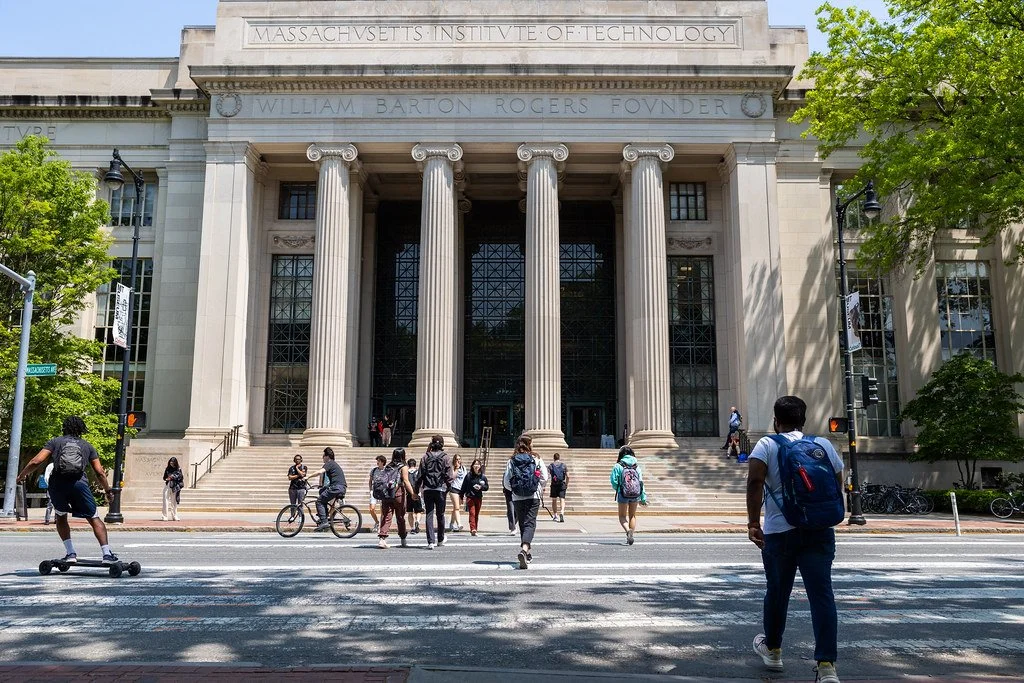
The Path to Excellence: Coming Out and Rising Up the Steps of MIT
Dylan’s parents felt swept up in a whirlwind: their son had recently come out to them as a trans man. They were supportive, but the cultural norms of their community posed real obstacles to acceptance.
As an immigrant family, they relied heavily on a tight-knit network of other households for support. Yet within their home culture, gender identity was a challenging topic of conversation. Their concern wasn’t just social friction — they worried about Dylan’s well-being, his confidence, and whether he would feel fully supported during one of the most important periods of his life.
At the same time, Dylan’s academic profile was exceptional. A 36 on the ACT, a 4.0 GPA with high rigor, and a strong extracurricular portfolio: leadership in multiple clubs, excellent performance in state and national competitions, and a high USACO Gold rating. A generation ago, this résumé would have nearly guaranteed admission to at least one Ivy+ institution.
Today, the landscape is different. At the most selective universities, grades and test scores are treated as a hurdle to clear — not a distinguishing achievement. Accepted students frequently demonstrate some form of outlier impact, whether through national recognition, entrepreneurial ventures, or unusually advanced technical work.
In short, Dylan’s profile was excellent — but excellence alone no longer guarantees admission to schools like MIT.
So how do we make up the difference?
Master the Story, Conquer the Doubt
When reviewing Dylan’s profile, one pattern stood out. Even before coming out, he was an accomplished student leader. But his most recent work showed a clear shift in ambition, creativity, and scale.
After coming out, Dylan’s extracurricular efforts took on a new level of scope. He began pursuing more technically ambitious projects, stepping into larger leadership roles, and taking calculated risks that hadn’t appeared in his earlier work. The shift suggested growing confidence, clarity of purpose, and a willingness to push boundaries.
This became the foundation of the narrative.
Rather than presenting Dylan as simply an excellent student, we framed his story around growth and emerging potential. His earlier accomplishments demonstrated capability. His more recent work demonstrated momentum — a brilliant student beginning to fully realize his voice and leadership style.
We put his most recent achievements under a microscope: What had changed? What risks had he taken? And what did those changes signal about his trajectory?
Carefully Crafted Essays Established a Cohesive and Compelling Narrative
One of the most compelling examples came from Dylan’s experience as a robotics mentor. We painted two vivid portraits from different years: one before his transition, and one after.
The first story showed excellence, but also caution — thoughtful leadership paired with hesitancy in proposing bold innovations. Dylan supported his team effectively, but often prioritized stability over experimentation.
The second story revealed a shift. Dylan proposed ambitious design changes, implemented creative adaptations under pressure, and coordinated complex project workflows. The result was a major victory on the national stage of robotics competition — but more importantly, a demonstration of evolving leadership and technical vision.
Across the application materials, we reinforced this pattern of accelerated growth. Recommendation letters, activity descriptions, and essays worked together to highlight increasing impact and initiative. We also aligned examples with MIT’s institutional priorities: hands-on problem-solving, collaborative innovation, and technical creativity.
The result was a cohesive narrative: not just a student who had achieved excellence, but one whose trajectory suggested extraordinary future potential.
Outcome: Admission to MIT
Today, Dylan is thriving at the Massachusetts Institute of Technology, where he’s continuing to pursue advanced robotics work, collaborating with peers who share his passion, and embracing a community where he can live authentically day to day.
His story highlights an important truth about modern admissions: exceptional students don’t just demonstrate excellence — they demonstrate growth, authenticity, and the capacity for future impact.
Dylan’s academic credentials opened the door. But it was the story of his evolving leadership, confidence, and ambition that ultimately made his application stand out.

Defying the Odds: How an H4 Visa Student Beat the GPA Filter for
a Top Aerospace Program
Aria’s family didn’t know what to do. The GPA seemed too low for competitive admissions. No one would take her for internships and research programs because her visa strictly forbade compensation or federal funding. Many scholarship opportunities would have been a perfect fit, except that she was ineligible. She came to me very late in the planning stage of the summer of her junior year. The family’s first question when we connected?
Is there even any point in aiming high for college admissions?
This was a fair thing to wonder. Broadly speaking, activities and grades often represent about half the weight of an admissions profile. If these were subprime, the road to acceptance at a top program looked very narrow indeed.
But Aria was determined. She’d spent her whole life obsessing over the mechanics of flight and the prospect of contributing to humanity’s ambitions among the stars. She wasn’t about to give up without a fight. So we rolled up our sleeves and got to work.
Thinking Like a Strategist: when certain elements are out of your control, you pivot to the ones that aren’t. The story, told in essays and letters of recommendation, had to be immaculate. That’s where my prior experience as a best-selling novelist shined: I spent extra time coaching Aria on these essays, combing through every character on the page to see where additional meaning or insight could be identified and unpacked.
Clarifying the Record: emphasizing the unique challenges of acquiring English as a third language in high school (alongside her native fluency in Bengali and Tamil) gave context for the rocky grades earlier in her academic career. Letters of rec enthusiastically supported the narrative that Aria’s high school journey was a triumph, not a shortcoming. The beautiful prose in her essays, painstakingly crafted over months, attested to this being a challenge she had long since overcome.
Pointing to Alternative Signs of Rigor and Excellence: She had a 1480 SAT score with a 790 in math. She had 4s and 5s on her AP testing in Calculus, Stats, Bio, Physics, and Chemistry. An informal research mentor we’d arranged from Cornell was able to speak volumes about her capabilities as a young scientist.
Still, I had a responsibility to prepare Aria for an uncomfortable reality: college applications are evaluated in stages. The first stage is vetting for academic readiness, and grades are often used to quickly determine the student’s potential to handle challenging academics. Ultimately, we were at the mercy of an Admissions Officer’s natural curiosity to dig deeper. While we waited for the results, I put together a tailored undergraduate strategy to show her that even if the outcome were attending a less selective school, there was still a creditable path to accomplishing her dreams. Fortunately, that plan wasn’t needed.
Admissions is a Marathon, Not a Sprint
The Early Results Weren’t Perfect. Almost exclusively, these came in the form of deferrals and waitlists. When Aria shared this information, she was mortified. That changed quickly though when she saw how excited I was getting.
The thing about deferrals and waitlists in 2026 is that university admissions departments are incredibly strained. They do not make those decisions lightly, since doing so creates more work for them down the road. When even the heaviest hitters like the University of Michigan, UW - Madison, and UIUC were saying ‘hang in there, we’re not finished yet’, that told me that our strategy had done its job. If Aria were ever to be admitted to a school like this, it would start with planting the seed of doubt in an admissions officer’s mind: if half the application is the strongest they’d seen all day, maybe the other half didn’t tell the whole story.
CU Boulder agreed: That was our first big win, since it was a top 20 program for aerospace. Aria started getting excited, and began planning her move to Colorado. And then the unthinkable happened.
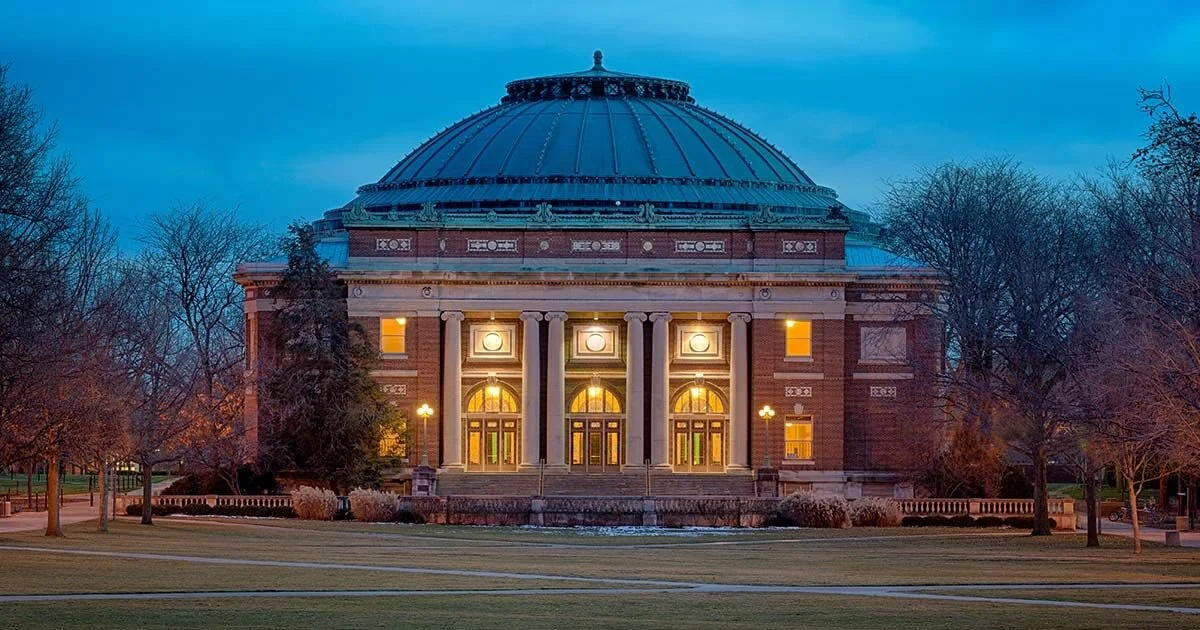
UIUC, the 7th best aerospace program in the country, agreed. They rank higher than Princeton and Cornell’s legendary aerospace programs, as well as the US Air Force’s most prestigious institute. And they wanted Aria. When she told me the news, she was quite literally shaking with emotion.
You can never hit a shot you don’t take. When the stakes are a student’s entire professional future, you shouldn't just be taking random shots in the dark—you want a master class in marksmanship. Hiring the right professional takes the guesswork out of the process and can turn a narrow roadblock into a launchpad.

Full Trajectory U-turn: from Community College to
Public Flagship Powerhouse
Aaron and I first met the summer after his sophomore year of high school. He was thoughtful, service-minded, and gregarious — but academically, he was struggling to find direction.
His GPA sat at a 2.8 unweighted. Even with straight A’s moving forward, he was on track for roughly a 3.2 by application season. His parents asked a difficult but reasonable question: “Are we going to need to settle for community college?”
At first glance, the outlook was uncertain. But a deeper look at Aaron’s profile revealed several promising signals:
1. The Academic Struggles Were Front-Loaded: Most of Aaron’s lowest grades came in 9th grade. That opened the door to a compelling growth narrative backed by measurable improvement.
2. A Clear Pattern of Service and Leadership: Aaron wasn’t idle after school. He volunteered at a community center and served as an elementary classroom teaching assistant — early signs of initiative and leadership.
3. Early Signs of an Extracurricular “Spike”: A strong performance in a regional DECA competition suggested the beginnings of a differentiated profile — something that can change how admissions officers evaluate a candidate.
Still, there were real challenges. Aaron initially expressed interest in computer science, but his STEM grades were among the lowest on his transcript. He also lacked research experience and recommenders who could speak to technical depth.
Change the Narrative, Change the Outcome
Rather than forcing an unconvincing STEM narrative, we pivoted toward a more authentic story: a student discovering purpose through community engagement and leadership.
We applied to most schools undeclared and emphasized Aaron’s evolution: From academic uncertainty to community leadership and emerging interest in technology as a tool for inclusive community empowerment.
Together, we positioned Aaron as a tech literacy advocate and local community leader — someone who would benefit from a strong academic environment and actively contribute to campus life. Outcome: $60,000 Scholarship to Pennsylvania State University Aaron was admitted to Penn State with a $15,000 per year merit scholarship for a total of $60,000.
While his GPA placed him at the very lowest end of admitted students, his application told a compelling story of growth, leadership, and purpose.
The result: Admission to a flagship public university $60,000 in merit aid, as well as access to world-class faculty, alumni networks, and career opportunities.
Aaron’s story is a powerful reminder that admissions decisions are about more than metrics and resumes: they’re also about narrative, growth, and potential.